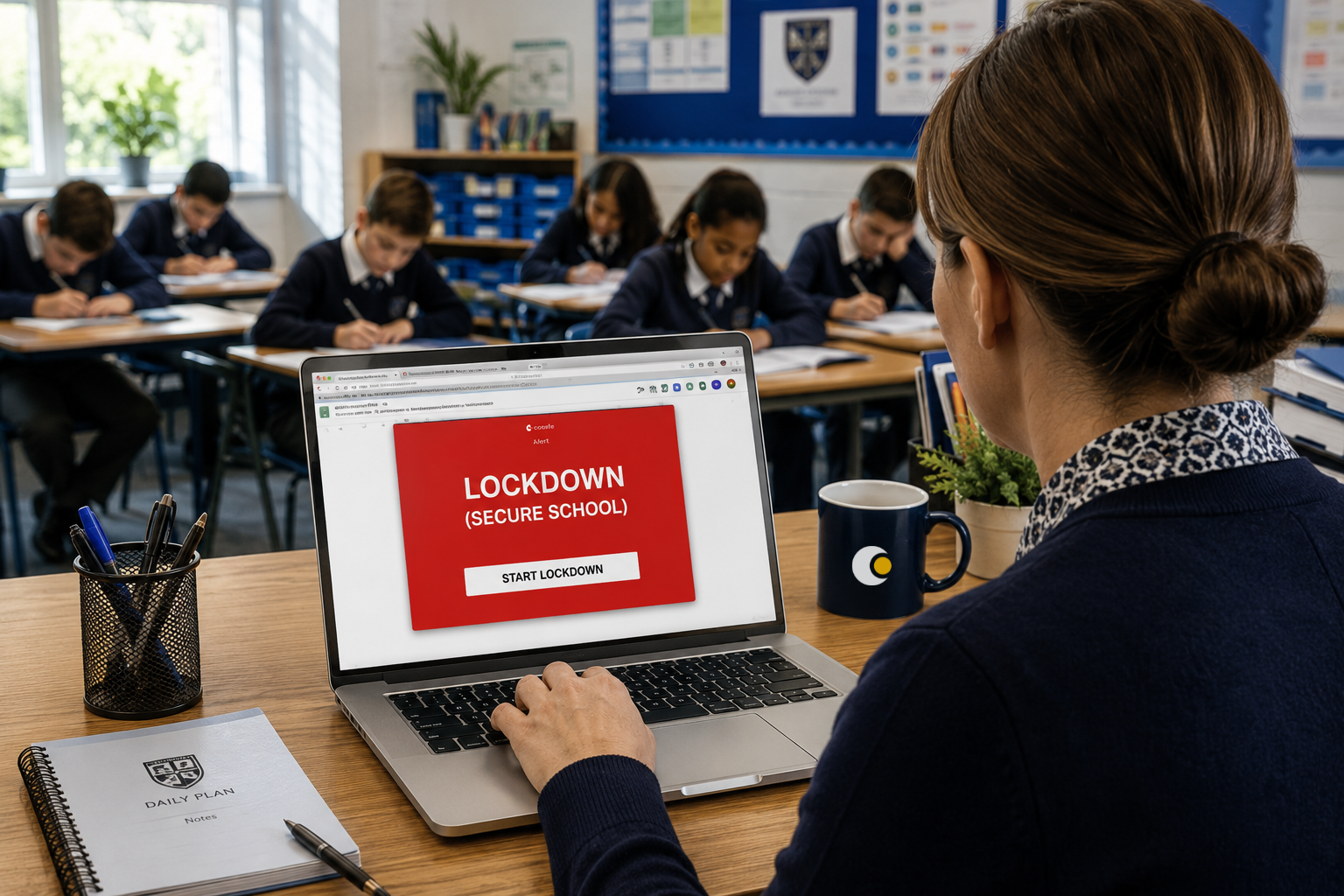
For UK education leaders, disruption is rarely contained to a single building or site.
Whether you’re overseeing a multi-academy trust, a college group with satellite campuses or a university spread across a whole town or city, critical incidents have a habit of cascading and escalating.
A powercut at one site triggers timetable changes elsewhere; a security concern near a student dorm affects teaching buildings across campus; a severe weather warning closes one location and suddenly thousands of students, staff and visitors need clear direction.
In moments like these, the challenge usually isn’t a lack of planning. It’s executing those plans across multiple sites, at speed, without confusion or inciting further complication.
When traditional communication falls apart
Most education providers already have incident plans, contact trees and escalation protocols in place. But during a real, fast-moving incident, traditional communication methods often struggle.
Email inboxes aren’t checked quickly enough, phone trees break when key staff are unavailable and WhatsApp groups fragment information, blur accountability and lack wider visibility. Onsite systems like PAs or alarms don’t reach people who are off campus or commuting.
In a multi-site scenario, these gaps are amplified even further. Different locations receive different messages, or receive them at different times, leadership teams lack a single shared picture of what’s happening, and staff are left unsure whether they’re meant to act or wait – a hesitation that could result in setbacks (or worse).
In real-life scenarios like these, many organisations discover that their plans are sound on paper but are hard to apply consistently or effectively in real-world conditions.
The added complexity of UK education sites
Colleges and universities face particular challenges in this regard. Large campuses, open environments, evening classes, visiting speakers, public events and students living on site all increase both the likelihood and the impact of a disruption.
Multi-academy trusts face a different but equally complex picture: geographically dispersed schools, central leadership teams and the need to coordinate responses while still allowing for local autonomy.
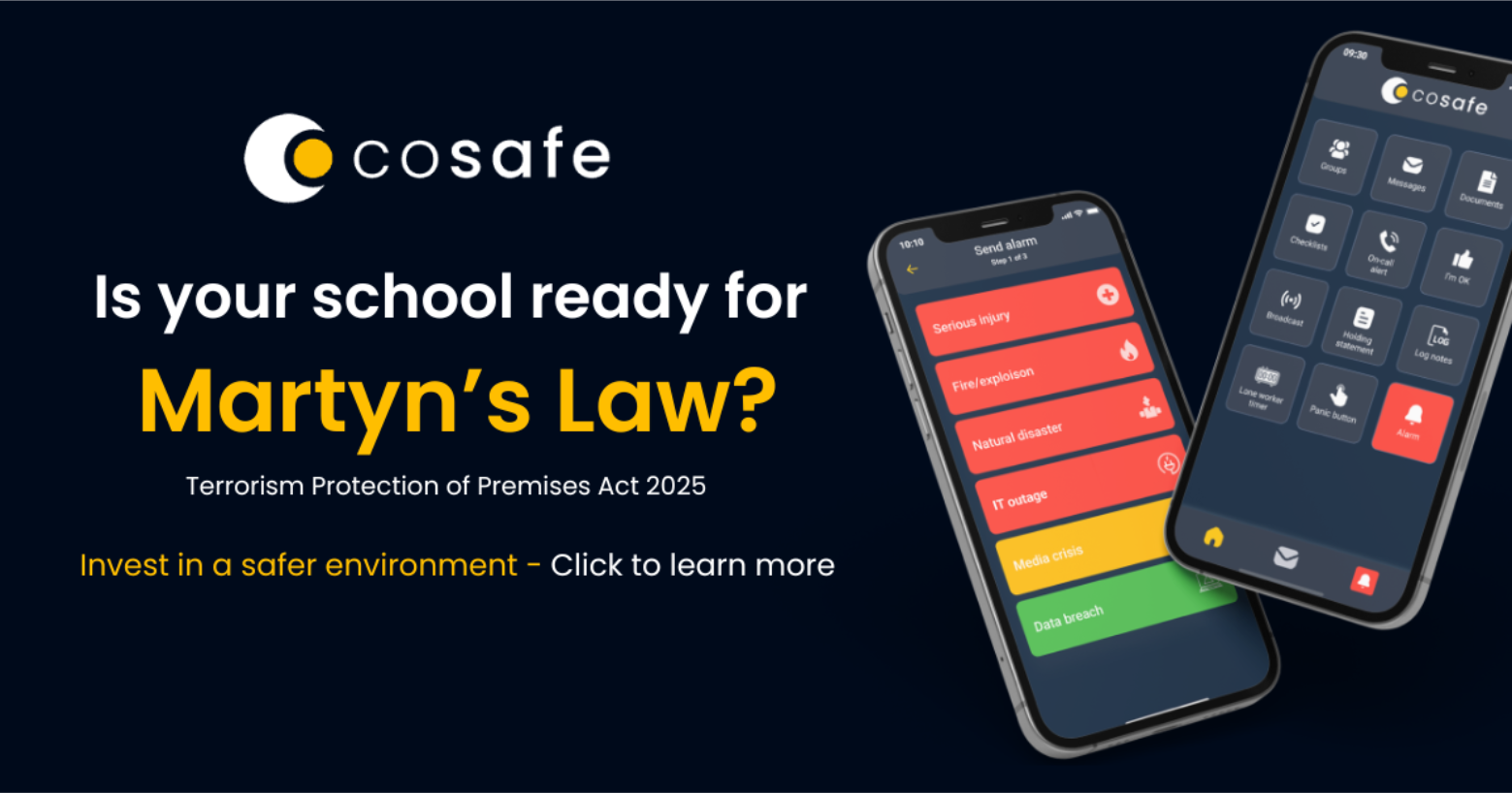
Layer on top evolving regulatory expectations – including clearer duties around emergency preparedness and communication under legislation such as the Terrorism (Protection of Premises) Act 2025 (often referred to as Martyn’s Law) – and the importance of reliable, auditable communication becomes even more apparent.
What effective multi-site communication actually looks like in 2026
In practice, resilient emergency communication across multiple sites depends on a few key principles:
- Speed | Alerts triggered in seconds, not minutes
- Targeting | The right people receive the right instructions
- Consistency | Every site hears the same message at the same time
- Two-way visibility | Leadership knows who has received and acknowledged information
- Central oversight | Avoidance of potential bottlenecks
This is where dedicated incident and critical communication platforms like Cosafe start to show their true value.
How Cosafe supports coordinated responses across sites
Cosafe is designed specifically to help organisations manage incidents that cut across locations, teams and roles.
From a single interface, authorised staff can trigger alerts tailored to specific sites, buildings or user groups, or broadcast across an entire trust or campus network. Messages are delivered via push notification, SMS or email, ensuring visibility even if devices are on silent or users are off site.
During an unfolding incident, leadership teams gain real-time insight into who has acknowledged messages, who may need follow-up and where further escalation is required. This shared operational picture is particularly valuable when managing parallel responses across multiple campuses.
Cosafe also enables secure, role-based communication between incident teams, allowing coordination to continue privately while clear instructions are sent out more broadly. Every action is logged automatically, creating a reliable audit trail for post-incident review or regulatory assurance.
Turning plans into action – consistently
One of the most common pain points in multi-site education environments is inconsistency: plans exist, but they’re interpreted or applied differently from one location to another.
Cosafe helps address this by embedding emergency procedures, checklists and guidance directly into the platform. When an alert is triggered – whether for lockdown, evacuation, IT disruption or severe weather – staff receive clear, step-by-step instructions aligned to your existing plans.
Because these procedures are digital, centrally managed and instantly accessible, updates can be rolled out across all sites at once. Staff aren’t relying on memory, printed documents or outdated intranet pages: they’re guided through the response in real time.
This approach not only improves safety outcomes, but also supports staff confidence during high-pressure situations, particularly in large or unfamiliar environments.
Preparedness beyond the incident itself
Effective emergency communication isn’t just about reacting when something goes wrong. It’s also about building readiness over time.
Cosafe supports this through tools for drills, training, document access and incident reporting. Staff can practise responses using the same platform they would rely on in a real emergency, helping reduce hesitation and uncertainty when it matters most. And, for leadership teams, this creates valuable insight into preparedness across sites by highlighting where additional support, training or refinement may be needed.
A calmer, more controlled way to manage multi-site disruption
Multi-site disruption will always be challenging. But confusion and fragmented communication don’t have to be part of the picture in 2026 and beyond.
By providing a single, trusted channel for alerting, coordinating and reviewing responses, Cosafe helps UK education providers move from reactive firefighting to confident, coordinated incident management – regardless of scale or organisational complexity.
If you’d like to explore how Cosafe could support your organisation’s approach to multi-site disruption and emergency communication, learn more or schedule a conversation with one of Cosafe’s education specialists to discuss your specific environment and needs today.